
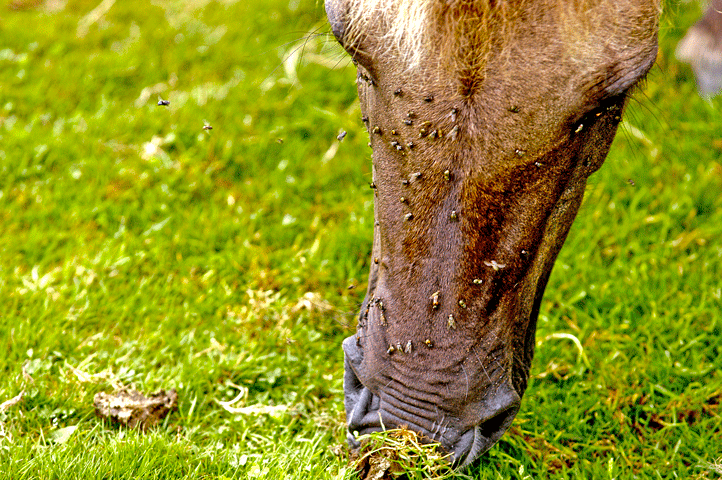
Q: In the summer months my horse tends to react severely to bug bites. Is there anything I can do nutritionally to help combat this?
A: Insect bite hypersensitivity (IBH), also known as sweet itch, is a common allergic skin disease in horses. Symptoms vary but often include recurrent hives, chronic itching, and hair loss. Managing a horse with IBH requires a holistic approach that considers environmental, medical, and nutritional factors.
When an insect bites a horse, proteins in its saliva can trigger the horse’s immune system. The horse’s body identifies these salivary proteins as foreign, which triggers an allergic response.
Start With a Balanced Diet for IBH Horses
First make sure your horse’s ration meets his nutrient requirements. A balanced diet supports the immune system and overall health.
Working with an equine nutritionist can help you evaluate your horse’s nutritional needs and ensure they are met before investing in additional supplements.
Omega-3 Fatty Acids and IBH in Horses
Nutritional support beyond a balanced ration for horses with IBH generally involves omega-3 fatty acid supplementation. Long-chain polyunsaturated fatty acids, specifically eicosapentaenoic acid (EPA) and docosahexaenoic acid (DHA), can help combat chronic inflammation in horses.
Plant-based fat sources such as flax and camelina oils primarily provide alpha linolenic acid (ALA), an omega-3 fatty acid. Although horses can ?convert? ALA into EPA and DHA, those with IBH should receive supplemental EPA and DHA ?rather than rely on that conversion?. Marine-derived sources provide EPA and DHA, although horses might find some products less palatable than others. Choosing a supplement formulated for horses can make it more likely they will eat it.
Vitamin E for Horses With IBH
Vitamin E also deserves consideration when evaluating a horse’s nutritional needs. Vitamin E acts as an antioxidant, helping protect muscle cell membranes from damage caused by free radicals. It also supports muscle health, and adequate levels contribute to normal nervous system function.
Horses on well-maintained pasture can often obtain enough vitamin E naturally, but levels decline in forage after harvest. Before adding a vitamin E supplement, work with your veterinarian to test your horse’s blood vitamin E concentration. The results can help determine whether supplementation is warranted and, if so, guide the appropriate product and dose.
Take-Home Message
Managing insect bite hypersensitivity involves a multifaceted approach that includes environmental control, medical management, and nutritional support. Before adding supplements, make sure your horse’s ration meets his nutritional requirements. Omega-3 fatty acids, particularly EPA and DHA, and adequate vitamin E might provide additional nutritional support, with supplementation decisions guided by your veterinarian or equine nutritionist.