
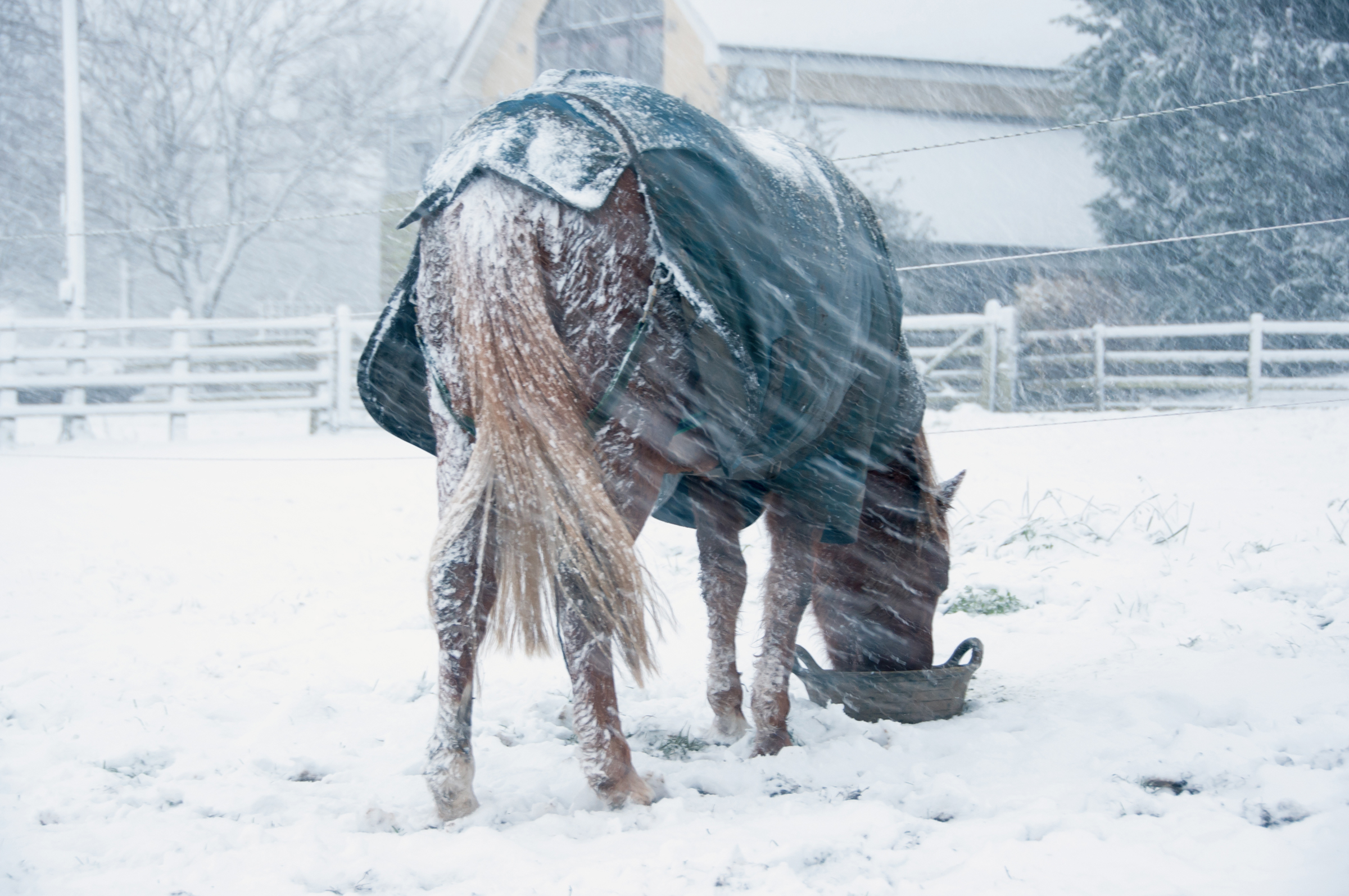
Ask 20 horse owners which winter blankets are their favorite, and chances are you’ll receive 20 different answers. For every batch of positive reviews, there’s a horse owner who didn’t like the product for one reason or another.
When deciding whether to buy blankets for your horse, consider his age, body condition, living situation, and the weather conditions of your area. A horse’s natural coat helps keep him warm, but he also needs shelter from wind and wet weather.
Here are a few things to consider when shopping for horse blankets.
Hardware on Horse Blankets
Buckle-front closures can be difficult to adjust while wearing gloves. Heavy-duty snaps can make blankets easier to put on and take off.
Guarantees for Longevity
Horses can be tough on blankets. Snags, rips, and tears reduce a blanket’s waterproofing and insulating qualities. Many makers offer a warranty or guarantee for a specific length of time. The price usually reflects those options. Compare warranty lengths and check what each covers before buying. Denier is a measure of fiber weight per unit length. Within the same fabric type, higher-denier materials generally offer greater durability. Typically, the lowest denier is 420, then it ranges up to 600 and 1200, with 1680 being the highest option.
Fill in Horse Blankets
Manufacturers describe blanket weight by the amount of insulating fill, measured in grams, ranging from lightweight (0-100 grams) to medium weight (150-250 grams) and heavy weight (300+ grams). Manufacturers are experimenting with a variety of insulating fabrics to improve breathability while keeping horses warm and dry.