
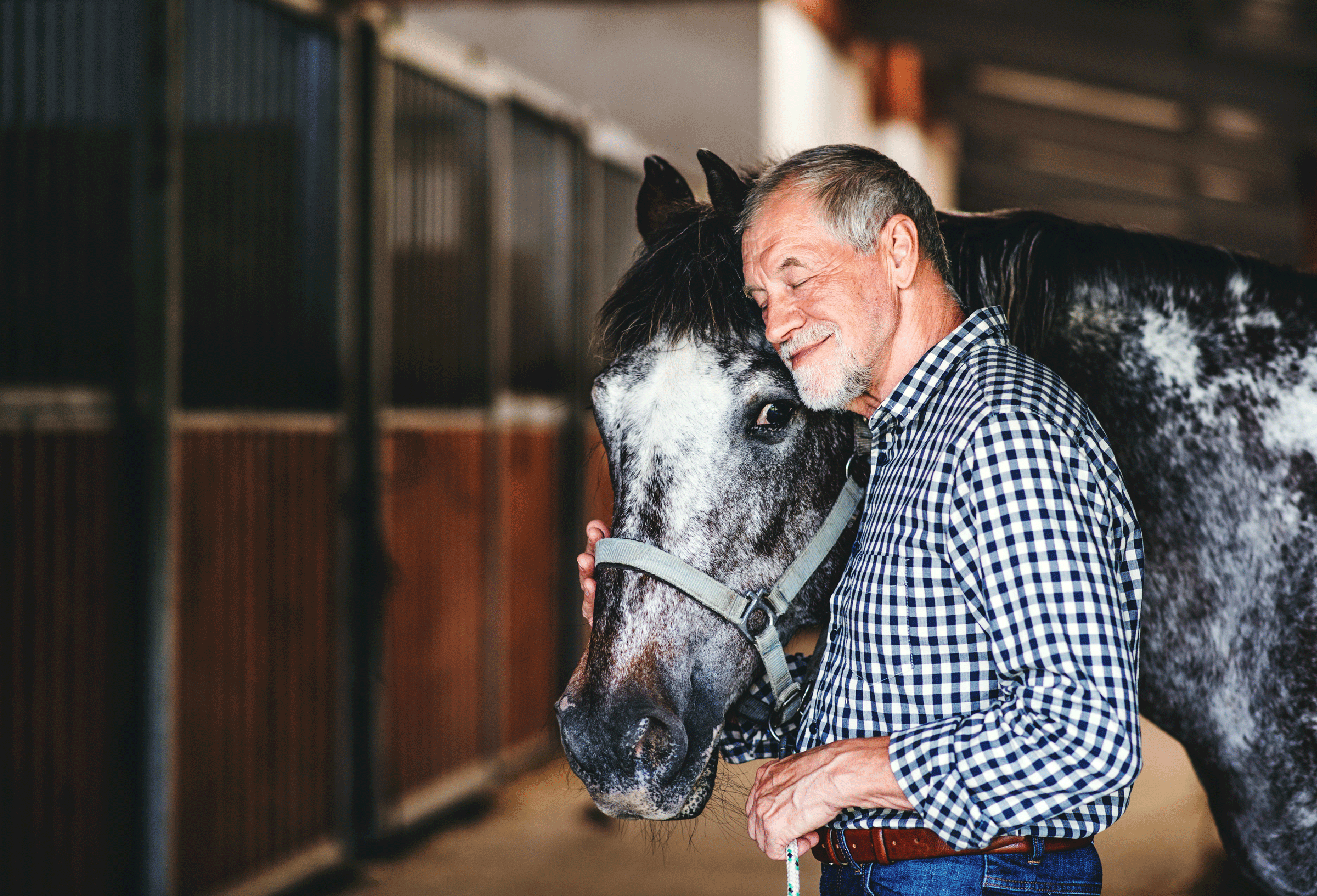
Older horses often have trouble holding good body weight, so any strategy that maximizes nutritional intake and absorption is important. Internal parasites can sap some of those needed nutrients. Decreasing immune function with advancing age has wide-ranging effects on the whole horse system, including the ability of the immune system to suppress internal parasite burdens.
Studies have demonstrated that old horses have significantly higher fecal egg counts (FECs) compared to young adult horses. The use of anthelmintics (chemical anti-parasite treatment) successfully reduces fecal egg counts in older horses.
The American Association of Equine Practitioners (AAEP) recommends that old horses follow similar deworming guidelines used for adult horses: a) perform fecal egg counts once or twice a year; b) assess dewormer efficacy through fecal egg count reduction testing; and c) target deworming treatments based on peak transmission seasons (spring and fall).
Just because a horse is older doesn’t mean it is necessarily a high egg shedder. Fecal egg count testing determines shedding capacity of each individual so deworming protocols can be tailored for each horse’s needs.
Combining an effective deworming protocol with manure removal at least twice a week and pasture rotation are other important strategies to control parasite burdens in all ages of horses.