
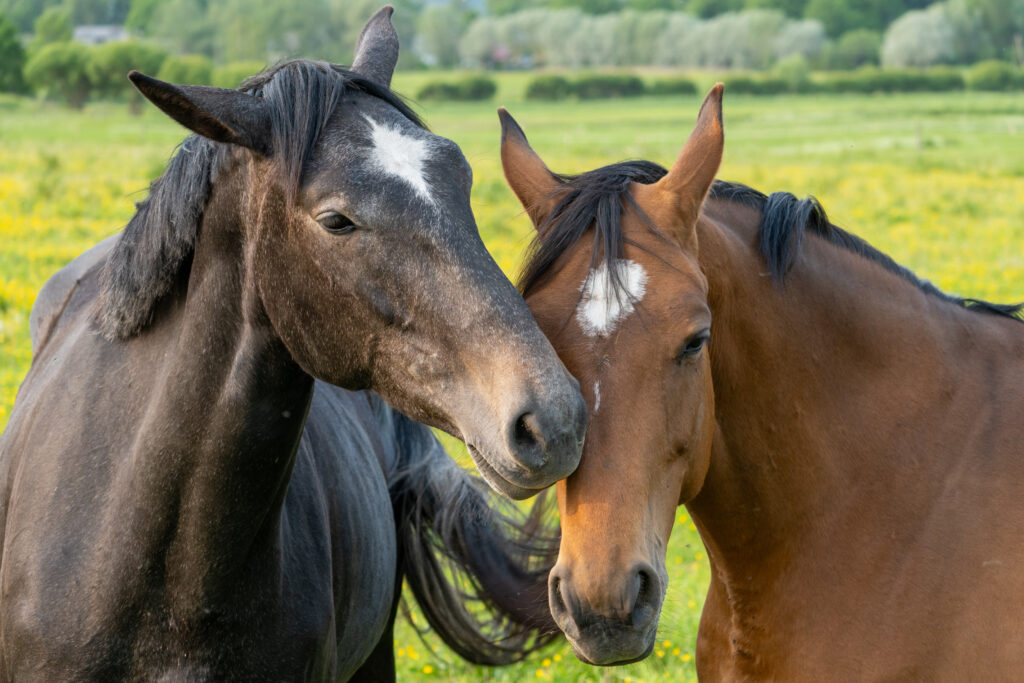
When horses die, their stablemates often appear to grieve if given the chance to spend time with the body—or show anxiety if they cannot, said researchers on a new study.
In this first in-depth scientific investigation into how horses respond to the loss of a companion, hundreds of owners reported surviving horses display strong and long-lasting emotions, which seem to depend on whether they understand their friend has died.
The findings highlight how death can affect horses’ welfare and underscore the importance of giving companions the opportunity to process the loss, said Claire Ricci-Bonot, PhD, of the Animal Behavior, Cognition, and Welfare Group at the University of Lincoln, in the U.K.
Do Horses Grieve?
“It’s difficult to understand what’s happening in their minds, but these are social animals, so it’s logical that they would be affected by the death of their companions,” Ricci-Bonot said. “There’s a lot of research now about how to manage the end of life of horses—but not how to manage the ongoing life of the companion who’s still there. This project is helping show that it is beneficial to show the dead body to the other companions, so they can understand that it’s finished and that that friend will never come back.”
By contrast, horses that do not witness the death or spend time with the body often appear to experience lingering anxiety—even six months later. “For them, the situation is not really resolved,” she said. “They don’t know what happened. Their companion disappeared, and they don’t know why.”
While many horse owners and veterinarians have long suspected horses grieve, scientific research has been limited to a few individual cases, such as mares losing foals. Ricci-Bonot’s supervisor, Daniel S. Mills, BVSc, PhD, MRCVS, Dipl. ECVBM-CA, European and RCVS recognized specialist in veterinary and behavioral medicine, also at the University of Lincoln, had recently studied grief in dogs. Building on that work, Mills, Ricci-Bonot, and colleagues set out to explore the phenomenon in horses.
Surveying Horse Grief Behaviors
They launched an online survey with questions about changes in surviving horses’ eating, sleeping, vocalizing, and social habits before and after a companion’s death, as well as up to six months later.
Owners of 325 surviving horses responded. They observed energy level changes within 24 hours in 89% of horses, with about two-thirds acting more restless and the others more subdued. They reported that about 77% altered their social behavior: 58% sought extra attention from handlers, and many increased their interactions with other horses, while some became standoffish or even aggressive. About 60% ate and slept less, and many seemed more vigilant about their surroundings. Roughly 69% changed their vocalization patterns, with some whinnying more and others going quiet. Many of these changes persisted for months.
Horses that shared a close or dependent bond with their companion were more likely to show behavioral shifts than those that only tolerated each other. Six months later, about two-thirds of the horses still showed altered arousal and social behaviors, though fewer continued to display changes in eating, sleeping, or vocalizing compared to the first day.
Saying Goodbye Matters for Horses, Too
Those allowed to stay with their deceased companion generally settled more smoothly, with fewer long-term changes in arousal, vigilance, or vocalization, Ricci-Bonot explained. Horses unable to witness the death or spend time with the body were the most likely to remain restless, vocal, and vigilant six months later.
“People say it’s like with children, that horses have a hard time dealing with death,” Ricci-Bonot said. “But I say it’s not like children, because with children, you can tell them that this other individual is gone forever. With horses, you can’t. So it’s better so show them, so they have the possibility to understand.”
The grief response, she added, appears related to the same emotional processes that drive separation anxiety when horses are parted from living companions.
The team is currently investigating this understudied condition in horses and invites owners to participate in their survey.